Pull Up a Bench: What Really Happens at Rifugio Dinner
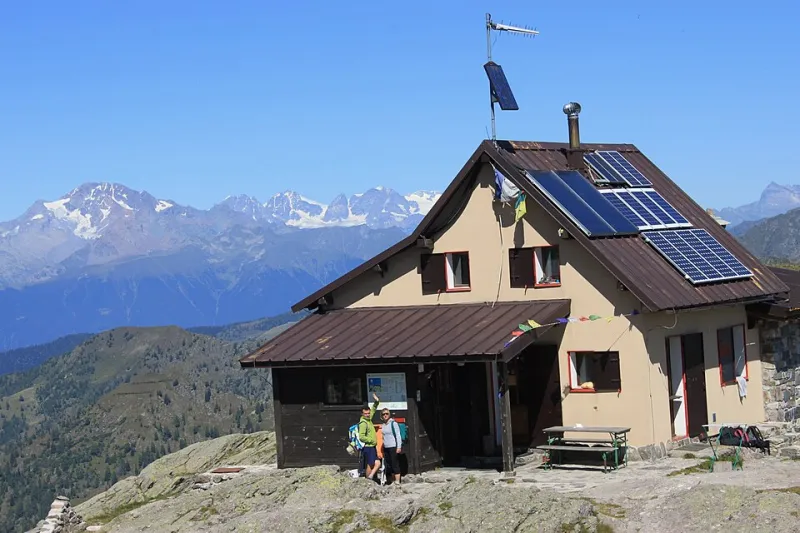
Photo: Pier B., CC BY-SA 3.0, via Wikimedia Commons
You come down from a high pass with gravel in your boots and a appetite that could fell a small mule. The rifugio is warm, the boots come off, the boots go on the rack, and then there is that slightly odd hour before dinner when everyone is showered but not quite social. You hover near the stove. You read the same notice about quiet hours three times. Then a warden bangs a pot, points at a bench, and the evening begins properly.
Rifugio dinner is not restaurant dinner. It is not a performance, and it is not usually a choice between the chicken and the fish. It is a set rhythm — half-board, one sitting, a long table or three — and the pleasure of it comes from giving in to that rhythm rather than trying to manage it. For UK walkers used to pub menus, table numbers and paying at the bar, the whole thing can feel faintly mysterious the first time. It should not. It is one of the most straightforwardly good parts of an alpine trip.
The half-board handshake
Most Italian mountain huts offer half-board: bed, dinner and breakfast in one price. That is the deal you have signed up for, and dinner is the main event. Expect a first course of pasta, soup or polenta; a second of meat, cheese or something stewed and savoury; bread on the table; fruit or a slice of cake to finish. It will be filling, it will be seasonal, and it will almost certainly be better than it needs to be after a day on the hill.
Do not expect a menu to linger over. In many rifugi the warden will simply tell you what is coming, or bring it. If you have a dietary requirement, say so when you book rather than at the table — vegetarian and gluten-free options are common but not universal, and the kitchen is tiny. A polite email in advance, or a note on the booking form, saves everyone a small awkwardness later.
Strangers at six-thirty
The seating is often communal. You may be waved towards a bench next to a German couple, a Milanese family and a solo walker from Sheffield. This is not a mix-and-mingle session with name badges. It is simply what happens when a small building feeds twenty people at once. You sit down. You say buonasera. You pass the bread.
For anyone travelling alone, this is the quiet magic of the thing. You do not have to join a group or manufacture conversation. The table does the work. Someone asks where you have walked from. Someone else says they saw you on the ridge. A warden mentions that the weather is turning. By the time the polenta arrives, you are in it.
If you are shy, arrive early rather than late. The first ten minutes are the easiest: fewer people, more space on the bench, and a chance to work out where the water jug lives. Sitting at the end of a table is also perfectly acceptable. You can be as sociable or as quiet as you like. Nobody is keeping score.
A small vocabulary goes a long way
You do not need Italian. You need about six phrases and the willingness to use them badly. Buonasera. Grazie. Per favore. Posso sedermi qui? — may I sit here? — is useful if the table is filling up. Buon appetito, said as the food lands, is a small courtesy that costs nothing. If someone offers you wine, a nod and grazie is enough. If you want to decline, no, grazie works just as well.
What matters more than grammar is tone. Mountain huts are informal places. A smile and a slightly hopeless attempt at the language will get you further than perfect pronunciation delivered coldly. The warden has heard every accent going. They are not marking your homework.
When the warden sits down
The best rifugio dinners have a moment when the warden stops working and joins the room. It might be a short announcement about tomorrow's weather. It might be a story about the hut's history, or a complaint about a missing cheese delivery. It might just be a chair pulled up at the end of the table with a glass of something.
This is where the evening stops being a meal and becomes a night in a mountain hut. Wardens are often the memory of the place — they know which pass is windy, which path is quiet, and which guest tried to dry socks on the stove last week. Ask them questions. They tend to enjoy being asked. A simple 'how long have you been here?' can unlock half an hour of good talk.
The solo walker's advantage
If you are walking alone, dinner is your best social hour of the day. It is also the easiest. You already have a reason to be there, and so does everyone else. You are not networking. You are not speed-dating. You are just a person with a plate, sitting near other people with plates.
One useful trick: bring a small notebook or a map to the table. It gives you something to do with your hands and an obvious conversation opener. Another: ask for recommendations rather than opinions. 'Is the col worth the detour?' lands better than 'What do you think of the route?' and usually gets a more useful answer.
Pudding, politics and the long goodbye
Dinner tends to wind down slowly. The plates go, the cake appears, someone produces a hip flask. Conversation drifts. In Italy, it is not rude to linger. It is rude to rush. You do not have to stay, but staying is often the point.
Eventually the benches get pushed back and people drift towards bunks or the stove. You will probably say goodnight to someone you met two hours ago and will never see again. That is fine. The table did its job. It turned a solitary hut stop into the part of the trip you will actually describe to people at home, usually badly, usually with your hands.
So pull up a bench. Pass the bread. Ask the warden about the polenta. Rifugio dinner is not complicated, and it is not trying to be. It is just the warm, filling, slightly chaotic heart of a night above the clouds — and it is waiting for you.