Barley Soup, Strudel and Second Helpings: A First-Timer’s Guide to Rifugio Food
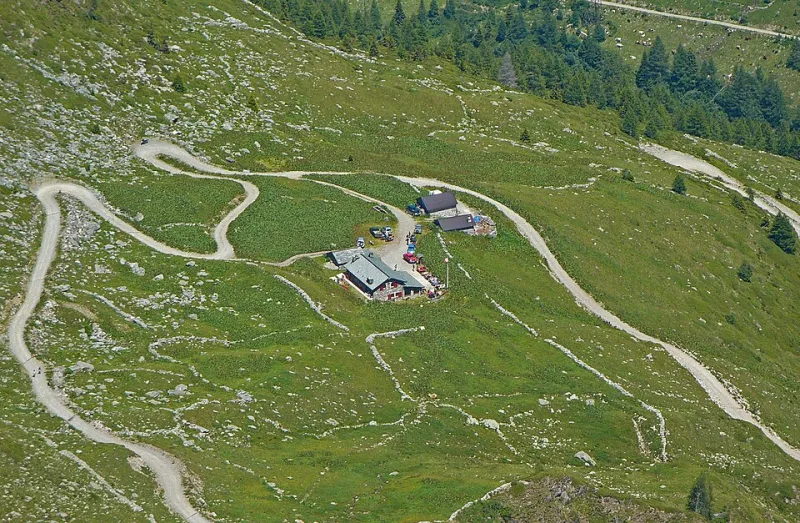
Photo: MatthewGhera, CC BY 2.0, via Wikimedia Commons
The first time you sit down to dinner in an Italian rifugio, something odd happens. You have walked for six hours, your legs are tired, your boots are steaming by the door, and then someone puts a bowl of barley soup in front of you and it is the best thing you have ever eaten. Mountain hut food is not fine dining. It is better than that: it is generous, regional and exactly what your body wants after a day above the clouds.
The half-board question
Most rifugi offer mezza pensione — half-board — which usually means dinner, bed and breakfast. Dinner is often a set menu: a primo such as soup or pasta, a secondo of meat or cheese with a contorno of potatoes or vegetables, and a dolce. Breakfast is bread, jam, butter, coffee and sometimes eggs or yoghurt. If you want a packed lunch for the next day, order it the night before; it will usually be bread, cheese, fruit and a chocolate bar, and it is worth every euro.
If you are not staying the night, you can often still eat dinner, but ring ahead. Huts are small, kitchens are smaller and the person cooking is also the person checking in the dormitory. A quick email or phone call the day before is the difference between a table and a shrug.
A menu that changes with the mountains
Rifugio food is a map of where you are. In the Aosta Valley, expect fontina, polenta, mocetta cured meat and seupa à la vapelenentse, a bread soup that tastes of thyme and long winters. In Piedmont, look for tome cheese, gnocchi and hearty risotto. Lombardy’s Valtellina brings pizzoccheri — buckwheat noodles layered with cabbage, potatoes and cheese — and sciatt, crisp little cheese fritters. Trentino and South Tyrol lean Austrian: speck, canederli dumplings, barley soup, apple strudel and kaiserschmarrn. In the Dolomites, polenta turns up with mushrooms, cheese or sausage, and the cakes are often made with ricotta or jam. Friuli has frico, a crisp cheese and potato cake that is far more delicious than it sounds.
The dishes worth a day’s walk
Some hut food is simply fuel. Some of it is worth shaping an itinerary around. Barley soup — minestra d’orzo — is the quiet hero of the Italian Alps: cheap, warming and endlessly variable. Polenta with mushrooms after a long climb is a proper event, especially when it arrives bubbling in a copper pan. Canederli in brodo, soft dumplings in clear broth, are the comfort food of South Tyrol. Pizzoccheri is heavy in the best possible way, and a slice of warm apple strudel with a spoonful of cream can justify an extra hour on the hill.
Then there is the grappa. You do not have to like it, but accepting a small glass is part of the ritual. So is asking for bis — a second helping — which is usually met with a smile rather than a bill.
How to flag dietary needs
Vegetarians are generally well looked after in Italy, but vegan food is harder in the high mountains. Gluten-free is possible if you give notice, but do not assume the kitchen has a separate preparation area. The key is to communicate early. When you book, write a short, clear message: ‘Sono vegetariano’, ‘Sono celiaco’, ‘Non mangio carne’, ‘Senza glutine’, ‘Senza lattosio’. If you have a serious allergy, say so explicitly and confirm again on arrival. Huts want to feed you well; they just need warning.
What to budget
Half-board in a typical Italian rifugio costs roughly €50–70 per person per night, depending on altitude, season and how remote the hut is. A separate dinner might be €20–30, breakfast €8–12 and a packed lunch €8–12. Drinks are extra: a beer is usually €3–5, a bottle of house wine €15–25, coffee €1.50–2.50. Tap water is free and safe; refill your bottle rather than buying plastic. Carry cash, because card machines are unreliable above 2,000 metres. Tipping is not expected, but rounding up is a nice touch.
Hut etiquette and small comforts
Arrive before dinner, take your boots off at the door and order drinks at the table rather than at the bar. Keep your voice down after 10pm. Ask before charging your phone. And if the menu sounds plain, remember that the person cooking has probably been up since dawn and is feeding a room full of tired walkers with limited ingredients and a lot of skill. The best rifugio meals are not complicated. They are just exactly right.