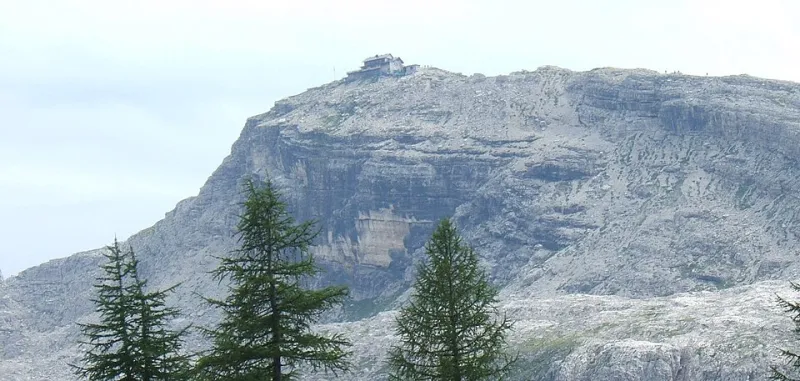
Swap the Ski Queue for Snowshoes: Why Winter Hut-to-Hut Should Be Your 2026/27 Alpine Escape
Photo: USDAgov, Public domain, via Wikimedia Commons
As I write in November 2026, the coming winter is already taking shape. The ski resorts are rolling out their packages, the flights to Geneva and Turin are filling up, and the same old conversation is starting: is it worth it? The lift queues, the €12 chips, the feeling that you have paid a lot to stand in a crowd. There is another way. Not a heroic, ice-axe-and-ropes way — a quiet, snowshoe-and-wood-stove way. The Italian Alps have a network of winter huts and low-level trails that suit UK walkers who want a week of cosy beds, hearty food and empty paths.
What a winter rifugio is actually like
Many Italian rifugi close in winter. Some open at weekends and during school holidays. A few have a winter room — an unstaffed space with bunks, a stove and blankets — where you can shelter if you know what you are doing. The staffed winter huts are the sweet spot: dinner at seven, breakfast at half seven, boots in the boot room and no shoes upstairs. You will sleep in a dorm, so bring earplugs and a sense of humour. It is social, but it is not a party. The pleasure is in the rhythm: walk, eat, sleep, repeat.
The routes that suit a week
You do not need a high-altitude traverse. Look at valleys where the paths stay below the avalanche zones and the huts are within three or four hours of the road. The Aosta Valley has good options around Valpelline and Champorcher. Piedmont has the Val Maira and Valle Pesio. Lombardy has the Valmalenco. Build a week with four or five walking days, two to four hours a day, and one rest day. For example: bus from Aosta to Valpelline, two nights at Rifugio Champillon, transfer to Champorcher, two nights at Rifugio Miserin, then back to Aosta. Or join a guided snowshoe week in the Val Maira and let someone else read the map.
Guided versus self-guided is the big decision. If you are new to winter walking, book a guide. They will handle the route choice, the avalanche forecast and the hut bookings, and you will learn a lot. If you are experienced, self-guided is perfectly possible on low-level routes, but you still need to check conditions daily and be honest about your limits.
Gear and safety essentials
Waterproof boots with a stiff sole, snowshoes, poles, gaiters, warm layers, a flask, a headtorch, a map and compass, an emergency blanket and a first aid kit. An avalanche transceiver, shovel and probe are only necessary if you are going into avalanche terrain — and if you are, you should be with someone who knows how to use them. For low routes, the main risks are slips, cold and navigation errors. Check the AINEVA avalanche bulletins, tell someone your plan, and do not rely on mobile signal. Travel insurance should cover winter walking, not just skiing.
Booking quirks and costs
Most winter huts take bookings by phone or email. Expect to pay a deposit, and carry cash for the balance and extras. Half-board is usually €45-65 per person, which is excellent value for a bed, dinner and breakfast. Ask whether the hut is staffed or whether you are booking the winter room. Ask about bedding and whether you need a sleeping bag liner. Check opening dates carefully — a hut that is open in August may be shut in February.
A sample manageable week
Day one: train from London to Turin, then bus to Aosta. Day two: bus to Valpelline, walk to Rifugio Champillon, settle in. Day three: a short local snowshoe loop and an afternoon by the stove. Day four: transfer to Champorcher, walk to Rifugio Miserin. Day five: descend, bus back to Aosta, eat something that is not polenta. Day six: rest or a valley walk. Day seven: home. That is a winter week that feels like an adventure without requiring expedition experience.
Why it beats the ski resort
It is cheaper, quieter and far more memorable. You will not get the same vertiginous thrill as a black run, but you will get something better: the sound of snow underfoot, a wood stove, a bowl of soup and a dorm full of people who are also pleased to be there. The Italian Alps in winter are not empty, but they are quiet enough. Go before everyone else works it out.