Dog-Eared Clues: How to Read a Rifugio Guestbook Before You Book
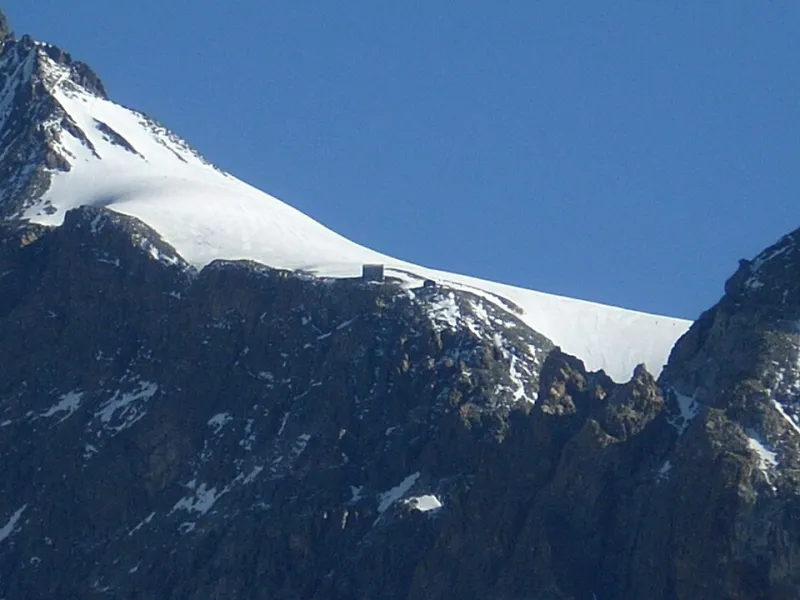
Photo: Gaggi Luca 76, CC BY 3.0, via Wikimedia Commons
There is a particular smell in an Italian rifugio that no booking website can reproduce: woodsmoke, wet wool, espresso and the faint mustiness of a guestbook that has been thumbed by decades of boots. You will usually find it near the bar, beside a jar of pens that may or may not work. It looks unimportant. It is not.
These books are informal archives. They are not official route reports, they are not moderated, and nobody is checking the spelling. But for UK walkers planning a hut-to-hut day, they can be quietly useful. Read them properly and you get clues about weather patterns, path conditions, hut character and the sort of night you are actually booking.
What actually lives in a rifugio guestbook
Open one and you will find a mixture of diary, complaint box and trail register. Walkers record the date, the route they came from and the state of the path. They mention storms, snow patches, broken boots, blisters, lost sunglasses and the fact that the polenta was enormous. Some entries are three words long. Others are miniature essays in four languages.
For a UK audience, it helps to think of it less like a polished visitor book at a National Trust café and more like a shared notebook on a bothy table. It is human, uneven and occasionally hilarious. That is exactly why it is worth a few minutes of your time.
Reading the weather without a forecast
Weather is the most common subject in any mountain hut book. Look for repeated phrases across different years and seasons. If several entries from late June mention snow on a high pass, that tells you something a generic forecast cannot. If walkers in September keep writing about icy patches in a shaded gully, believe them.
You do not need fluent Italian to spot the useful words. Ghiaccio means ice. Neve means snow. Nebbia means fog. Vento forte means strong wind. Pioggia means rain. A line like 'sentiero bagnato e scivoloso' is telling you the path was wet and slippery, which is usually more practical than a poetic description of the view.
Route conditions and the honesty of tired handwriting
Some of the most valuable entries are the least elegant. A hurried note that a path is closed, eroded or harder than expected can save you an unpleasant surprise. Look for names of passes, cols and via ferrata sections, and compare entries from different dates. One bad report might be a one-off. Three similar reports across a summer are a pattern.
Be careful, though: guestbooks are not guidebooks. A confident scribble from someone in trainers does not mean a route is suitable for everyone. Use the book as a prompt for better questions, not as a substitute for a map and a proper route plan.
The food, the beds and the small print
Hut life is not only about the path. Guestbooks often reveal the character of a place: whether the dorm is quiet, whether the keeper is welcoming, whether dinner is simple or generous, whether there is a private room worth asking about. Comments about food are especially revealing. A dozen entries praising the barley soup are a better signal than one grumpy paragraph about lukewarm coffee.
Do not over-index on a single complaint. People write in guestbooks when they are delighted, exhausted or annoyed, and sometimes all three. Look for tone and repetition. If several entries mention a cheerful welcome or a particularly good breakfast, that is the sort of clue worth carrying into your booking plans.
Questions to ask the keeper
A guestbook is best used as a conversation starter. When you ring or email a rifugio, ask about the things the book cannot tell you. Has the path from the valley been repaired this season? Are there still water sources on the upper section? Do they recommend an early start for the exposed traverse? Is the dorm likely to be full midweek?
Keepers know their mountain better than any online review. If you mention that you saw a note about snow on a pass, they will usually tell you whether it is still relevant. That is the real value of the guestbook: it turns a vague booking enquiry into a specific, useful conversation.
How to use the book before you book
If you are choosing between huts, look for patterns rather than headlines. A hut with years of entries praising its welcome, its food and its sensible advice is probably a good bet for a first alpine night. A hut with repeated notes about a tricky access path is not necessarily a bad choice, but it is one to approach with the right kit and timing.
Use the book to plan your day, too. Entries can tell you how long a traverse actually took ordinary walkers, not just the fastest person in the guidebook. They can warn you about a section that feels exposed in wind, or a descent that is harder than the map suggests. That is the sort of information UK walkers often crave: honest, ground-level detail rather than glossy alpine fantasy.
Leave a useful entry
Before you close the book, add your own note. Include the date, the route you walked, the conditions and anything you wish you had known. 'Beautiful views' is lovely but not much help to the next person. 'Path from the col was icy in the morning; poles useful; soup excellent' is a small gift.
Forty years of rifugio guestbooks are not a formal archive, but they are a living one. Read them with curiosity, ask the keeper what still applies, and let the dog-eared pages make your next alpine day a little safer and a lot more memorable.