Narrow Ledges, Steady Feet: A Nervous Walker’s Guide to Exposed Hut-to-Hut Days
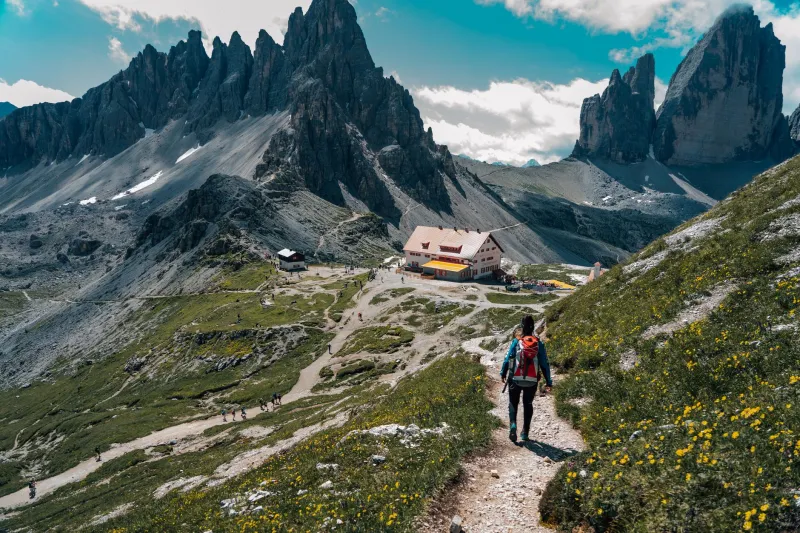
There’s a particular kind of silence that falls over a group when the path narrows, the grass gives way to scree, and someone says, just a bit too brightly, “It’s fine, just don’t look down.” For plenty of UK walkers, the appeal of hut-to-hut walking in Italy is enormous: high beds, early starts, bowls of pasta at altitude. The trouble is that the same routes often include the sort of ground we’d normally avoid on a wet Sunday in the Lakes. Exposure is part of the deal in the Alps, but it doesn’t have to be a dealbreaker.
The trick is to stop treating exposure as a vague fear and start treating it as a route feature you can read, question and plan around. You don’t need to become a climber. You do need to be honest about what you’re comfortable with, and clever about how you choose your days.
Read the route description like a local
Guidebooks and hut websites are usually good at telling you the distance and the ascent. They’re less reliable at telling you how the ground will feel under your boots. Look for specific words: exposed, cabled, airy, narrow ledge, scrambling, tratto attrezzato, sentiero esposto. In Italian route descriptions, esposto is the one to watch. It doesn’t automatically mean technical, but it does mean a slip could have consequences.
Grades help, but they’re not a universal language. A T3 in one guidebook may feel like a T4 in another, and a route described as “easy scrambling” by a Dolomites local can feel quite different to a British walker whose scrambling experience is limited to a sunny afternoon on Sharp Edge. Cross-check the route on a map, look at the contour spacing, and read recent reviews or trip reports with a pinch of salt. If three people mention “the exposed bit” and one person says it was “fine”, believe the three.
Also, study the photos properly. Not the glossy summit shot, but the ones of the path itself. Is there a handrail? Is the trail cut into a steep slope? Are people walking one behind the other with a big drop on one side? That’s the information you need.
Ask the rifugio warden the right questions
Rifugio wardens are not just there to check your booking and hand out blankets. They know the local paths in the way a Lake District fell runner knows the back of Skiddaw. Ask them before you set off, and ask specifically. “How exposed is the next section?” is a good start, but it helps to be more precise: “Is there a narrow ledge?”, “Are there cables or chains?”, “If the weather turns, is there an easier way down?”
If your Italian is rusty, learn a few phrases: Ci sono tratti esposti? means “Are there exposed sections?” Com’è il sentiero oggi? means “How is the path today?” And C’è una via alternativa? is the one that can save your day. Wardens will often point you towards a lower route, a valley path, or a variation that skips the airy traverse. They’d much rather you ask than discover the answer halfway across a ledge.
It’s also worth asking about the weather window. Exposure feels very different in gusting wind or after rain. A path that’s manageable in dry, still conditions can become genuinely unpleasant when the rock is greasy and your jacket is flapping like a flag.
Build confidence with a route that gives you options
You don’t have to book a full traverse to get the hut-to-hut experience. Some of the best alpine days are out-and-back routes from a single rifugio, or short two-hut links that stay on broader paths. Look for routes that follow old military roads, valley floors, or wide balcony trails rather than narrow crests. Many Italian rifugi sit at the foot of bigger objectives, so you can enjoy the high life without committing to the sharp end.
If you do want to test your head for heights, choose a route with an obvious escape. A path that can be reversed easily, or one where a lower alternative runs parallel, takes the pressure down a notch. It’s much easier to stay calm when you know you’re not locked into the exposure for hours. And if you’re walking with a group, agree beforehand that anyone can call a pause without needing to justify it. The bravest thing on an alpine path is often the person who says, “I need a minute.”
Kit matters, too, though not in the way adverts suggest. You don’t need a rope for a marked alpine trail, but you do need boots you trust, poles that won’t collapse, and a pack that doesn’t swing about when you’re concentrating. Keep your hands free. Put the phone away. Eat something before the tricky bit, not after. Low blood sugar makes everything feel steeper.
Turning back is not a ruined trip
Here’s the thing about exposure: it’s personal. A ledge that feels like a motorway to one walker can feel like a plank over a canyon to another. There’s no medal for pressing on, and no shame in turning around. The mountains don’t keep a scorecard. A day that ends with a hot chocolate back at the rifugio, a card game and a decent view is still a good day.
If you do turn back, try to do it before the difficult section, not in the middle of it. Give yourself permission to make the call early. Then make a plan B: a lower walk, a nearby lake, a long lunch. Some of the most memorable hut days involve no summit at all, just a sunny bench and the sound of cowbells.
For summer 2026, if you’re eyeing a hut-to-hut route and the word exposed makes your stomach flip, don’t write the whole idea off. Read carefully, ask direct questions, choose routes with exits, and keep your expectations flexible. The Alps are full of paths that give you the high-altitude feeling without demanding you enjoy the vertigo. And if you do decide to stop at the edge of the ledge, the rifugio will still have a bed, a bowl of soup and a very good view waiting for you.