Ride Up, Walk Far: The Case for Lifts in a Sensible Alpine Day
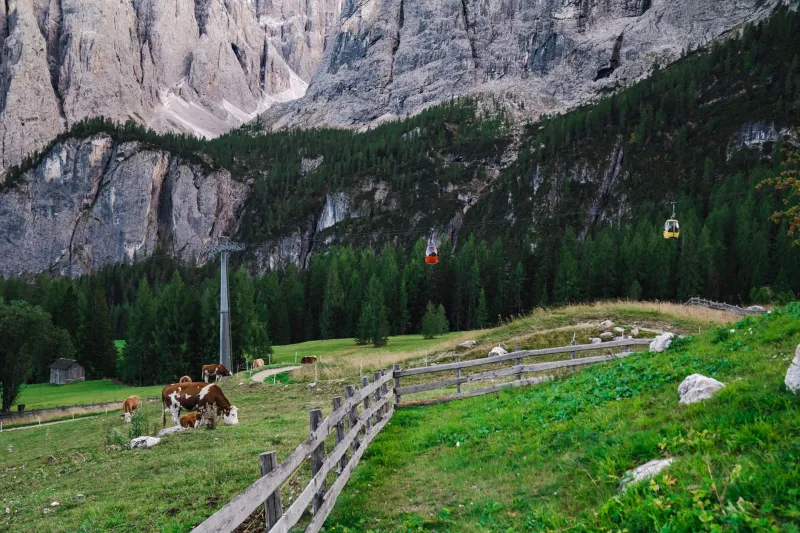
Somewhere between the car park and the lift station, a small voice starts up. It sounds suspiciously like a fell runner you once met in the Lake District. It says: real walkers go up under their own steam. It says: a cable car is just a ski lift wearing summer trousers. It says: if you cannot walk to the rifugio, you do not deserve the strudel.
That voice is not evil. It is just badly informed. In the Alps, lifts are part of the mountain infrastructure, not a confession of weakness. Used well, they buy you height, time and a better weather window. They get you to the high places where the huts are, the views open up, and the day actually happens.
This is not an argument for riding every lift and walking nothing. It is an argument for being honest about what you want from a short alpine trip — and for spending your limited annual leave on the mountain, not on a boring forest road.
The guilt is a British import
In the UK, we tend to treat the start of a walk as sacred. The car park, the village hall, the gate with the wonky sign — that is where the day begins, and every metre after it must be earned on foot. Fair enough. But alpine valleys are not British valleys. They are often long, steep and served by roads, farms and lift systems that have been moving people uphill for decades.
Refusing a lift on principle can mean starting at 1,100 metres and trudging up a warm, dusty track for two hours before the path even becomes interesting. Meanwhile, the ridge, the col and the rifugio are waiting above. If you have one week in the Dolomites rather than a whole summer, that trade-off deserves a second look.
When an assisted start is the smartest boot in your pack
A lift-assisted start makes sense in more situations than the purists admit. Here are the ones that come up most often for UK walkers.
Your knees have opinions. Going up is usually fine. Coming down 1,200 metres of stone steps and steep gravel is what wrecks people. A lift can remove the least interesting ascent and leave you fresh for the descent that actually needs care. Or it can do the opposite: ride up, traverse high, and walk down a gentler valley. Either way, you are managing load, not dodging effort.
You have a hut booked and a weather window. Summer afternoon storms in the Alps are not a rumour. If a cable car gets you onto the high route by 9am instead of 11am, you are off the exposed ground before the clouds start flexing. That is not cheating. That is planning.
High rifugi fill up. The most beautifully placed huts — the ones with the long views and the small dorms — often book out months ahead. If the only way to link your booked hut night into a sensible day is a lift, take the lift. The mountain does not award points for a miserable road walk.
Your fitness is real but not alpine. You can run 10k and still find a 1,400-metre ascent with a pack surprisingly rude. An assisted start lets you acclimatise to altitude and distance without turning day one into a survival exercise.
The lift is part of the culture. In Italy, the funicular or gondola is not a theme-park ride. It is how locals get to high pastures, huts and trailheads. Using it is about as controversial as taking the bus to the start of a Scottish glen walk.
How to keep it a proper mountain day
The trick is to use the lift as a doorway, not as the whole house. A good assisted day still has a shape: height gained, ground covered, a high point, a hut, and a descent that feels like you have been somewhere.
Start by looking at the route profile, not just the distance. A lift to 2,000 metres followed by an eight to twelve kilometre traverse with 400 to 600 metres of ascent is a full day in anyone's book. A lift up, a photo, a coffee and the same lift down is not. Aim for a line from A to B, even if B is a different lift station or a village bus stop.
Try to include at least one continuous walking section between lifts. A ridge, a col, a high balcony path or a second valley makes the day feel earned. If your knees allow, walk the final descent. Arriving at the hut on foot, even after a morning lift, still counts.
Check the practicalities before you commit. Some lifts run only in high summer. Some close in wind or lightning. Some stop running early enough to strand a slow walker. Ask at the hut or tourist office, check the last descent time, and have a plan B that does not involve a road walk in the dark. Carry full mountain kit, not a city rucksack. The lift does not change the weather.
Assisted starts that still feel like a day out
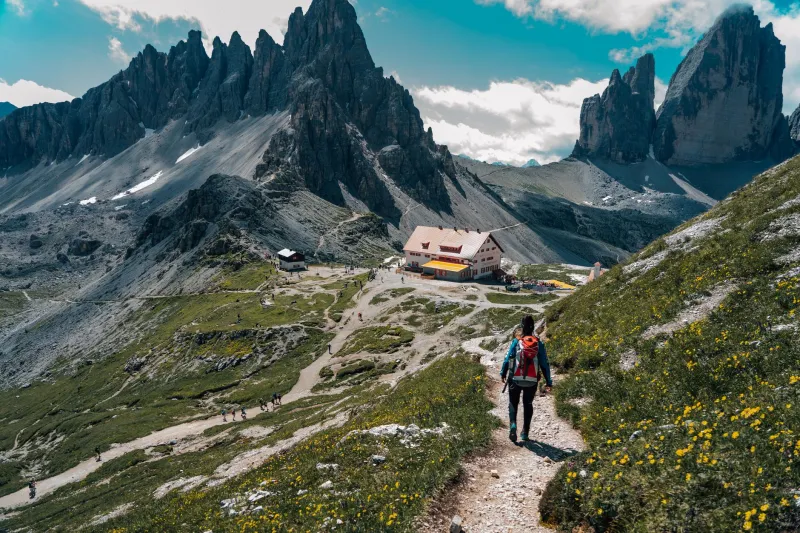
In the Dolomites, the summer lifts around Val Gardena, Alta Badia and Cortina can turn a long valley slog into a high balcony walk within minutes. You still get the limestone towers, the rifugio lunch and the scree. You just get there before the afternoon cloud. In the Aosta Valley and the western Italian Alps, little gondolas and funiculars often serve villages and high pastures, linking naturally into hut-to-hut routes.
A good pattern is this: lift to a high trailhead, walk a traverse to a rifugio, sleep, then descend on foot the next morning. You have used the lift once, walked two proper days, and avoided a dull approach. Nobody at the hut will ask for your lift ticket. They will ask if you want a second helping of barley soup.
More mountain, less car park
The point of an alpine day is not to suffer on the least scenic part of the route. It is to be up there, moving through the landscape, with enough time and energy to notice it. If a cable car or chairlift helps you do that, take it without the apology.
Save your purism for the ridge. Save your knees for the descent. And save room for the strudel.