Concrete, Kettles and Old Front Lines: Sleeping in Italy’s Great War Rifugi
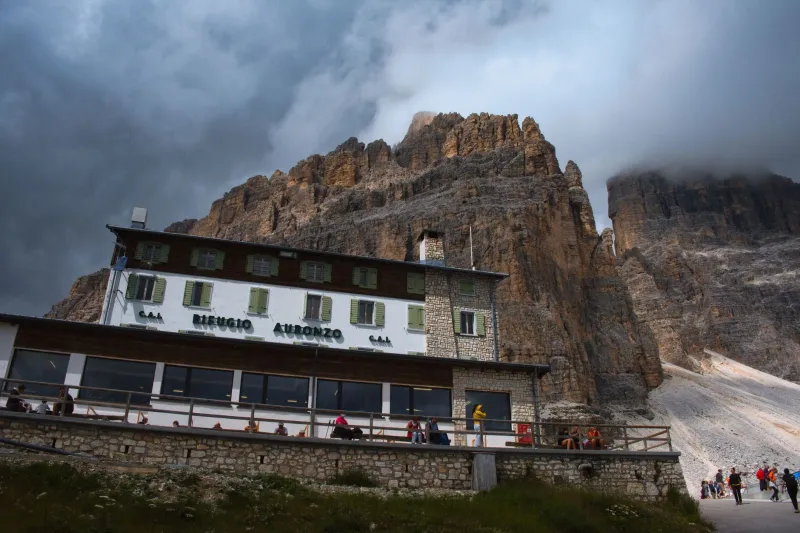
Stand on the terrace of a hut above Cortina or on the Pasubio plateau and the first thing you notice is the quiet. Then you notice the straight lines. A low wall of grey stone, a lip of concrete around a dark opening, a rusted iron ring set into the rock. Italy’s Great War huts are not theme parks. They are working mountain refuges that happen to sit inside a landscape still scored by the 1915–18 front.
Here at Rifugio Salvin, we like a hut with a story. But there is a difference between a story and a spectacle. These places ask you to sleep, eat, walk and look — and to remember that the mountains are not a museum.
What makes a rifugio a Great War hut?
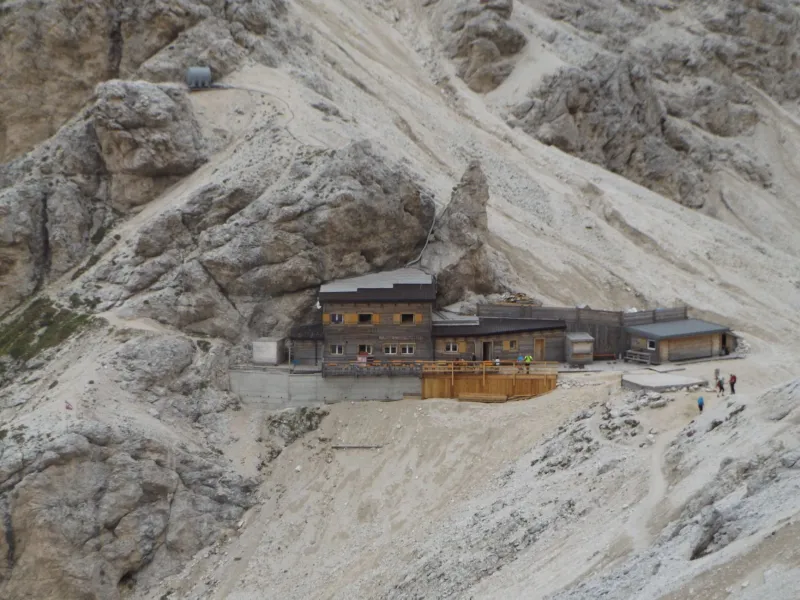
You will not always get a brass plaque by the door. Sometimes the clues are in the bones of the building: thick stone walls, low ceilings, small windows, a cellar that feels more bunker than larder. Sometimes they are outside: a zigzag of trench lines, the mouth of a tunnel, a scatter of old military roads, or a via ferrata cable that follows a route soldiers once used to move supplies.
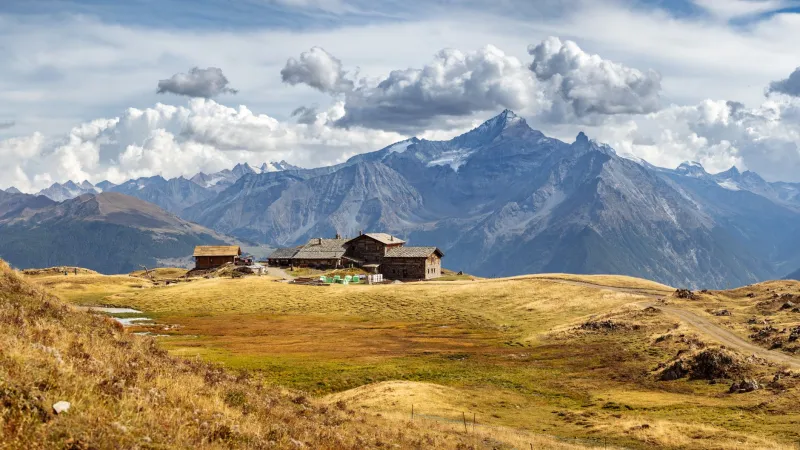
The setting gives it away too. Huts in the Dolomites, on the Pasubio, in the Adamello and along the old Asiago front often grew out of military positions. Rifugio Lagazuoi above Cortina is the obvious gateway, with tunnels and trenches in its shadow. Rifugio Achille Papa on the Pasubio sits near the extraordinary Strada delle 52 Gallerie. In the Adamello, several refuges began life as barracks or observation points. You do not need to be a military historian to notice. You just need to look up from your soup.
The night you actually get
A night in one of these huts is not a sombre pilgrimage. It is a normal rifugio night with an unusual backdrop. You will probably sleep in a shared dorm, often in bunks, with blankets or a sleep sheet depending on the hut. Dinner will be hearty and early: barley soup, polenta, maybe a plate of cheese and a strudel that earns its place. The lights go off before you are ready. The person above you will rustle. Someone will get up at 5am to catch the light.
What changes is the atmosphere around the edges. You might eat beside a small display of photographs, helmets or tools. You might find a plaque to a regiment, or a faded stencil on a wall. You might step outside after dinner and see the line of an old trench running away from the terrace in the last light. It can be moving. It can also be slightly odd, sitting with a beer while history sits just beyond the picnic table. Both feelings are allowed.
How to recognise the heritage without turning it into a checklist
UK walkers are used to reading a landscape. Think of the Lake District’s old slate quarries, or a National Trust estate where a ha-ha or a ruined mill tells you how the land was used. Italy’s front-line huts work in a similar way, but the scale is bigger and the history is closer.
Look for straight lines in the rock. Look for old stone steps that do not seem to go anywhere. Look for loopholes, metal brackets, and the remains of cableways. Read the hut’s own information boards, if it has them, and ask the keeper if you are unsure. Many are happy to point out what is original and what is rebuilt. Do not assume every lump of concrete is a gun emplacement, and do not assume every tunnel is safe to enter.
A night with a martial past: what to expect
Expect simple comforts rather than solemn ceremony. These are mountain huts first. You will still need cash for drinks, earplugs for the dorm, and a head torch for the corridor. Hot showers may be limited or cost extra. Electricity might run on a generator. The keeper might be busy, cheerful and not in the mood to give a lecture on the Isonzo campaign.
Expect weather to matter more than history. The fronts here were fought in snow, rock and sudden storms, and the same conditions still shape your day. A via ferrata route that looks straightforward in a photograph can be a serious undertaking in wind. If you are new to exposed ground, book a guide or choose a valley walk instead. The history will still be there.
Also expect the hut to be busy in summer. These are not secret places. The Lagazuoi area and the Pasubio are popular, and for good reason. If you want a quieter night, aim for midweek, late June or early September, and book ahead. The 2026 season will fill up in the usual way, especially around Italian public holidays.
Visiting respectfully
Treat the trenches as fragile. Do not walk on crumbling parapets, pull stones from walls, or pocket bits of metal. What looks like rubbish may be the last physical trace of someone’s war. Do not enter sealed tunnels, and do not wander into open ones without proper kit and local advice. If a route is marked as closed, it is closed.
Keep the noise down. A hut is a shared space, and a battlefield is not the place for a Bluetooth speaker. Ask before photographing people, especially staff and other guests. Read the room. Some visitors will have family connections; others will just be tired walkers. Both deserve a peaceful dinner.
And please do not treat the mountains as a museum. The cows still graze, the snow still melts, the paths still need repair. Buy a coffee, fill your bottle, pay for the bunk, and leave the place as you found it. That is the most useful respect you can show.
A good first hut for the history-curious
If you want a gentle introduction, base yourself in Cortina and take a lift up towards Lagazuoi. You can walk among preserved positions, sleep in a hut, and be back in the valley the next day. For something more rugged, the Pasubio offers a full day of old roads and high ground, with Rifugio Achille Papa as a solid overnight stop. Both work well for UK walkers travelling by train to Verona or Venice, then onward into the mountains.
The best approach is simple: book a bunk, walk a marked route, look closely, ask questions, and let the quiet do the rest. These huts are not relics. They are places where people still sleep above the clouds, with the old front line just outside the window.